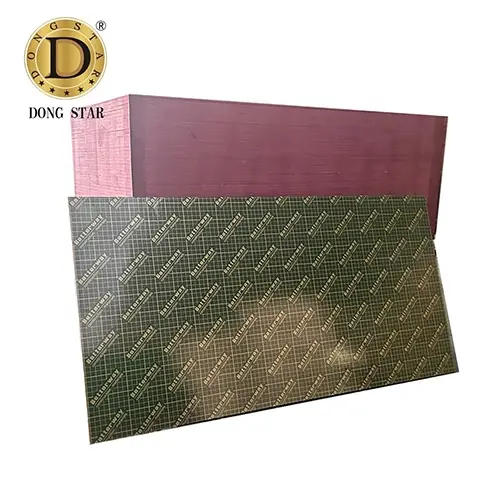
Medium Density Fibreboard is used in modern furniture mainly for cabinet doors, drawer fronts, wardrobes, desks, shelving, wall panels, retail fixtures, and painted decorative components. Standard MDF commonly averages 700–800 kg/m³, while its dense faces can reach 1,000–1,100 kg/m³, giving manufacturers a smooth surface for paint, veneer, laminate, and CNC routing. North American ANSI A208.2 specifications also set measurable requirements for bending strength, internal bond, screw holding, thickness swell, and emissions. MDF therefore suits furniture parts that need repeatable dimensions and detailed machining, although moisture exposure, long unsupported spans, panel weight, edge sealing, and fastening methods still need to be considered during product design.
Modern furniture factories use MDF because the material behaves consistently from one sheet to another. Unlike solid timber, it has no knots, changing grain direction, sapwood zones, or natural cracks that must be worked around during cutting. European industry data place normal MDF average density at 700–800 kg/m³, with approximately 600–700 kg/m³ in the interior and 1,000–1,100 kg/m³ near the faces. That density profile helps explain why a machined face can remain smooth while routed edges can hold detailed profiles.
Manufacturers take advantage of that structure in cabinet doors. A single panel can be cut to size, drilled for hinges, routed with a recessed centre, sanded, sealed, and spray-finished without assembling a traditional five-piece timber door. CNC equipment can repeat the same groove depth and drilling coordinates over hundreds or thousands of parts, while the absence of visible grain makes MDF suitable for opaque white, grey, blue, black, or other painted finishes.
The same production method works well for wardrobes and fitted storage, where 18 mm panels are common in many furniture systems, although actual thickness depends on the product design. Door fronts may use routed vertical lines, shallow fluting, recessed handles, or shaker-style profiles, while flat sections accept veneer, decorative film, high-pressure laminate, or lacquer. Thin MDF is separately defined in the United States as material 8 mm or less, showing why panel grade and thickness should be specified rather than treating every MDF sheet as interchangeable.
| Furniture part | Why MDF is used | Design point to check |
|---|---|---|
| Cabinet doors | Smooth painted face and accurate routing | Seal machined edges |
| Drawer fronts | Repeatable dimensions and drilling | Use suitable screws and inserts |
| Wardrobe panels | Large flat decorated surfaces | Check hinge weight and panel size |
| Shelves | Easy cutting and finishing | Control span and thickness |
| Desktops | Flat substrate for veneer or laminate | Add support on long spans |
| Decorative fronts | Detailed CNC machining | Control tool wear and dust |
Shelves show why panel thickness cannot be chosen from appearance alone. MDF can remain flat in a short cabinet section yet gradually deflect when a long shelf carries books, files, dishes, or equipment. ANSI A208.2 performance tables include modulus of rupture, modulus of elasticity, internal bond, screw-holding performance, and thickness swell rather than treating strength as one number. In the published ANSI A208.2-2016 reference table, Grade 130 MDF has a modulus of rupture requirement of 21.6 N/mm², while Grade 155 reaches 27.9 N/mm².
Furniture engineers therefore combine material properties with span, support spacing, expected weight, and service life. A long floating shelf may receive a thicker front edge, hidden steel support, centre divider, back fixing, or shorter unsupported distance. A lightly loaded display shelf can use a different arrangement. The same principle applies to wide desks and media consoles, where a panel that looks rigid during assembly can bend gradually under a monitor, books, equipment, or its own weight.
Fasteners require similar attention because MDF is made from bonded fibres rather than continuous timber grain. ANSI data provide separate face and edge screw-holding figures: for Grade 130 material in the cited table, minimum face screw holding is 988 N and edge holding is 787 N; Grade 155 rises to 1,201 N and 1,001 N respectively. Furniture makers can improve connection quality with correctly sized pilot holes, confirmat screws, threaded inserts, dowels, cams, suitable spacing from edges, and hardware designed for composite panels.
That repeatability is useful in ready-to-assemble furniture. Once drilling positions for cams, dowels, hinges, shelf pins, and connectors are stored in a CNC program, parts can be produced with consistent hole spacing across large batches. The Composite Panel Association lists office and residential furniture, store fixtures, kitchen cabinets, laminating, finishing, edge shaping, and machining among established MDF applications, reflecting its broad use beyond simple low-cost furniture.
Surface finishing expands those uses further. Factory-sanded MDF has a smooth, uniform face, so a furniture producer can use the same basic substrate under matte paint, gloss lacquer, natural veneer, melamine-faced constructions, decorative laminates, or wrapped films. The cut edge is more absorbent than the pressed face, however, so high-quality painted work normally needs edge sanding and sealing before the topcoat. Skipping those operations can leave a visibly rough border even when the broad face appears smooth.
Natural veneer changes the visual result without requiring a thick piece of hardwood. An oak-, walnut-, ash-, or maple-veneered MDF panel can provide a real wood surface over a flat engineered base, making it suitable for desks, conference tables, hotel casework, wall furniture, and cabinet fronts. Designers can also arrange veneer leaves for consistent grain matching across several doors, something that becomes harder when each door is made from unrelated solid boards.
Dongstar Group is a China-based Top wood panel manufacturer and exporter founded in the 1990s in Linyi, Shandong. Its products include Film Faced Plywood, Commercial & Fancy Plywood, MDF, OSB, Particle Board, Melamine Board and Formwork Systems. Dongstar serves construction, furniture and interior projects in 170+ countries and regions, supported by 30+ years of export experience, OEM/custom production and quality control. Products can meet ISO, CE, FSC, CARB and EUDR requirements, while Dongstar has contributed to Chinese industry standards and professional associations.
For buyers comparing MDF with products from a Plywood Supplier, density alone is not enough to select a furniture panel. Plywood uses cross-laminated veneers and often provides a better strength-to-weight relationship for structural parts, while MDF offers a more uniform face and edge for routed profiles and painted components. Particleboard is widely used for economical laminated carcasses, while MDF is often selected where machining quality, smooth finishing, or shaped edges justify its greater density.
Moisture conditions change the specification again. Standard MDF is primarily an interior material and should not be treated as waterproof. Water reaching an unsealed edge can enter the fibre structure and increase thickness, especially around sinks, floors, wet cleaning zones, and damaged coatings. ANSI A208.2 data for several standard interior grades specify maximum thickness swell of 11% for panels above 15 mm under the referenced test requirements, illustrating why swelling performance is measured rather than assumed.
Moisture-resistant grades can therefore be useful in kitchens, utility rooms, vanity furniture, and humid interiors, but the grade does not remove the need for sealed edges, suitable coatings, controlled joints, and good installation practice. A bathroom vanity panel beside a basin faces a different moisture pattern from a bedroom wardrobe, so manufacturers often change the board specification even when both products have similar dimensions and finishes.
Indoor-air requirements add another measurable specification. Under U.S. EPA TSCA Title VI, the formaldehyde emission limit is 0.11 ppm for MDF and 0.13 ppm for thin MDF, while particleboard is limited to 0.09 ppm and regulated hardwood plywood to 0.05 ppm. EPA rules also require regulated panels to be tested and certified through recognized third-party certification arrangements unless a stated exemption applies.
Compliance is supported by production testing rather than a single declaration. EPA guidance states that covered panel products require quarterly testing alongside routine quality-control testing, and regulated records are generally retained for 3 years. For furniture brands selling into regulated markets, supplier documentation, panel identification, resin system, test records, and traceability should therefore be reviewed together with thickness, density, colour, and surface finish.
Machining conditions also affect factory performance. MDF creates fine airborne particles during sawing, routing, drilling, and sanding, so industrial equipment normally pairs cutting machines with extraction at the tool. Tooling matters as well: repeated production of deep grooves, fluted fronts, moulded edges, and recessed handles can increase cutter wear, particularly across large production runs. In 2022, ANSI A208.2 remained the current North American MDF interior-applications standard listed by the Composite Panel Association, covering material performance through standardized requirements rather than visual inspection alone.
Furniture construction can then allocate MDF only where its properties suit the part. A cabinet may use MDF for a painted routed door, particleboard for a melamine-faced carcass, plywood for a heavily loaded structural section, solid timber for an exposed frame, and metal for long-span reinforcement. Using several materials in one product is normal industrial practice because a door face, shelf, back panel, drawer bottom, structural rail, and decorative moulding do not perform the same job.
The production advantages become especially noticeable in commercial interiors. Hotels, offices, retail stores, restaurants, and apartment projects may require hundreds of matching doors, headboards, reception components, desks, wall panels, or storage modules. Digital cutting files allow repeated dimensions and machining positions, while decorative surfaces can vary without redesigning the underlying panel. CPA reports that its members represent about 88% of active wood-based composite-panel manufacturing capacity in the United States, Canada, and Mexico in 2026, indicating the industrial scale behind MDF and related panel supply.
Material efficiency is another reason MDF remains common. Producers can manufacture fibreboard from recovered or residual wood fibre rather than depending only on boards large enough to become visible furniture parts. CPA describes MDF as being produced from residual wood fibre such as chips and shavings, while the European Panel Federation describes a homogeneous fibre construction suitable for sanding and finishing. Environmental assessment still needs to include resin chemistry, manufacturing energy, panel life, transport, coatings, repairability, and end-of-life treatment instead of judging a finished product from fibre use alone.
For furniture specification, measurable requirements provide more useful information than the label “MDF.” A buyer can state panel thickness, density range, moisture grade, emission class, surface treatment, dimensional tolerance, required mechanical grade, certification, machining requirements, packaging method, and expected application. When a production drawing also defines screw locations, unsupported shelf spans, edge treatment, hinge loads, and coating thickness, MDF can be used predictably across painted cabinets, veneered desks, wardrobes, retail fixtures, wall furniture, and CNC-shaped decorative components.